
Ed Smith’s Lemon and Sage Piccata
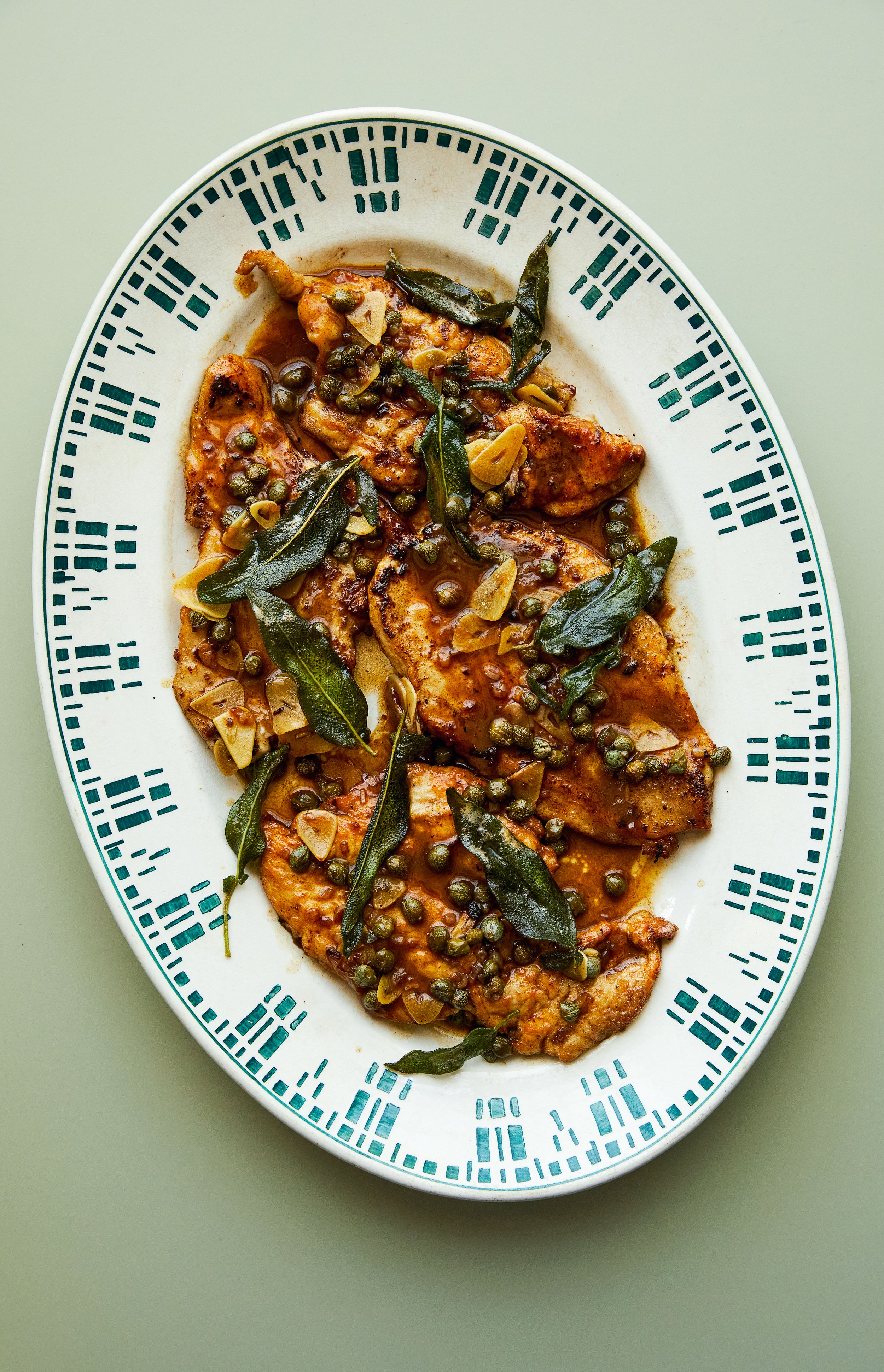
In Ed Smith’s brand new recipe book, Peckish, he showcases over 80 straightforward chicken recipes that will have you coming back for more. Arranged by the different cuts of chicken (drumstick, thighs, breast, wings, etc), as well the whole bird, recipes include midweek meals and dishes that are worthy of weekend gatherings. Ed has kindly shared this recipe with us to celebrate the launch of Peckish.
LEMON AND SAGE PICCATA
FOR 3–4
This method of cooking chicken breast is speedy, self-saucing and perhaps surprisingly succulent. It will become a favourite (if not already one). Sage is not typically involved in a piccata, but I like how it imparts its flavours into the cooking fats, and subsequently the pounded, dredged chicken. Typically, I’ll serve sautéed spinach and mashed potatoes alongside. But it’s great with many combinations of potato, green vegetable, leaves and/or bouncy bread for soaking up juices.
Ingredients
1 shallot, finely diced
4 garlic cloves, finely sliced
12 sage leaves
2 tbsp baby capers nonpareilles
100ml (3½fl oz) chicken stock (page 198) or water or white wine
Zest and juice of 1 lemon
2 large skinless chicken breasts (370–425g/13–15oz)
3 tbsp plain (all-purpose) flour
2–3 tbsp neutral oil
40g (1½oz) butter, cubed
Flaky sea salt and ground black pepper, to taste
Method
1. Before you start preparing and cooking the chicken, make sure any sides you plan to serve alongside are in hand. Dice and slice the shallot and garlic, pick the sage leaves, locate your capers and stock, and zest and juice the lemon.
2. Butterfly the chicken breasts. Hold them flat on a board with one hand and use a sharp, long knife to cut them in half horizontally. Cut each breast in two and use a rolling pin or meat tenderizer to bash the thicker parts so it’s an even 1cm (½in) thick all over. Season all sides of the chicken very generously with salt and pepper.
3. Spread the flour over a plate, then dredge the chicken pieces in it, dusting off any excess.
4. Set a heavy-based skillet or frying pan over a medium-high heat. It probably won’t be big enough to hold all the chicken at once, so cook it in two batches. Add the oil, half of the butter and half of the sage leaves. Once the butter has melted and begins to foam, push the sage leaves to sizzle on one side and begin to fry the chicken for 1½ minutes per side, plus another 30–60 seconds for luck. It really doesn’t take longer than 4 minutes in total. Transfer the chicken and sage leaves to a warm plate and repeat.
5. Once the chicken is resting and the sage leaves are out, add the shallots to the fat that remains in the pan. Fry for 45 seconds, stirring occasionally, then add the garlic and lemon zest and cook for a minute more. Pour in the stock, bring to the boil, then simmer energetically for 2 minutes to deglaze the pan and reduce the liquid by a third. Whisk in the remaining butter, then add the capers and lemon juice. Pour over the chicken breasts and serve.
ALSO CONSIDER
Instead of stock, deglazing the pan with 75ml (2½fl oz) white wine plus a splash of water.
Omitting the sage and adding a sprinkle of finely chopped parsley at the end.
You can buy Ed’s cookbook here and follow him on Instagram here.
ABOUT THE AUTHOR
ED SMITH (@rocketandsquash) is an award-winning food and recipe writer. After leaving a career as a lawyer for a life in food, he trained as a chef, worked briefly in restaurants and pop-ups, and now cooks, consults, develops recipes, writes and creates. Ed’s acclaimed cookbooks include Good Eggs, Crave, On the Side and The Borough Market Cookbook. He regularly contributes recipes to Waitrose Weekend and Waitrose Food magazine, and has written for all major UK recipe supplements, magazines and online food platforms.